
A one-star review lands for a dental practice in Phoenix on a Friday night. Nobody sees it until Monday morning, nobody replies until later that day, and the office manager still can’t tell whether other locations received reviews over the weekend. By then, prospective patients have already read the complaint and seen the silence next to it.
That gap is why review management software now covers four jobs, monitoring, requesting, responding, and reporting. Most tools claim all four, but they don’t do them equally well. One platform sends fast text invitations yet buries location data. Another gives executives clean dashboards but makes a single shop pay for governance it will never use.
This list is sorted by buyer situation, not feature count. I look at monitoring coverage, request automation, response workflows, integrations, pricing clarity, and fit by location count. Where pricing is hidden behind a quote, I say so. Where a tool falls short, I name it, because star ratings alone don’t fix a broken workflow.
Table Of Contents
Table of Contents
- 1. Synup
- 2. Birdeye
- 3. Podium
- 4. BrightLocal
- 5. NiceJob
- 6. GatherUp
- 7. Reputation
- 8. ReviewTrackers
- 9. Trustpilot Business
- 10. Yotpo
- How the ten review management platforms compare on pricing, trials, and best fit
- Matching the Platform to Your Location Count and Review Volume
1. Synup
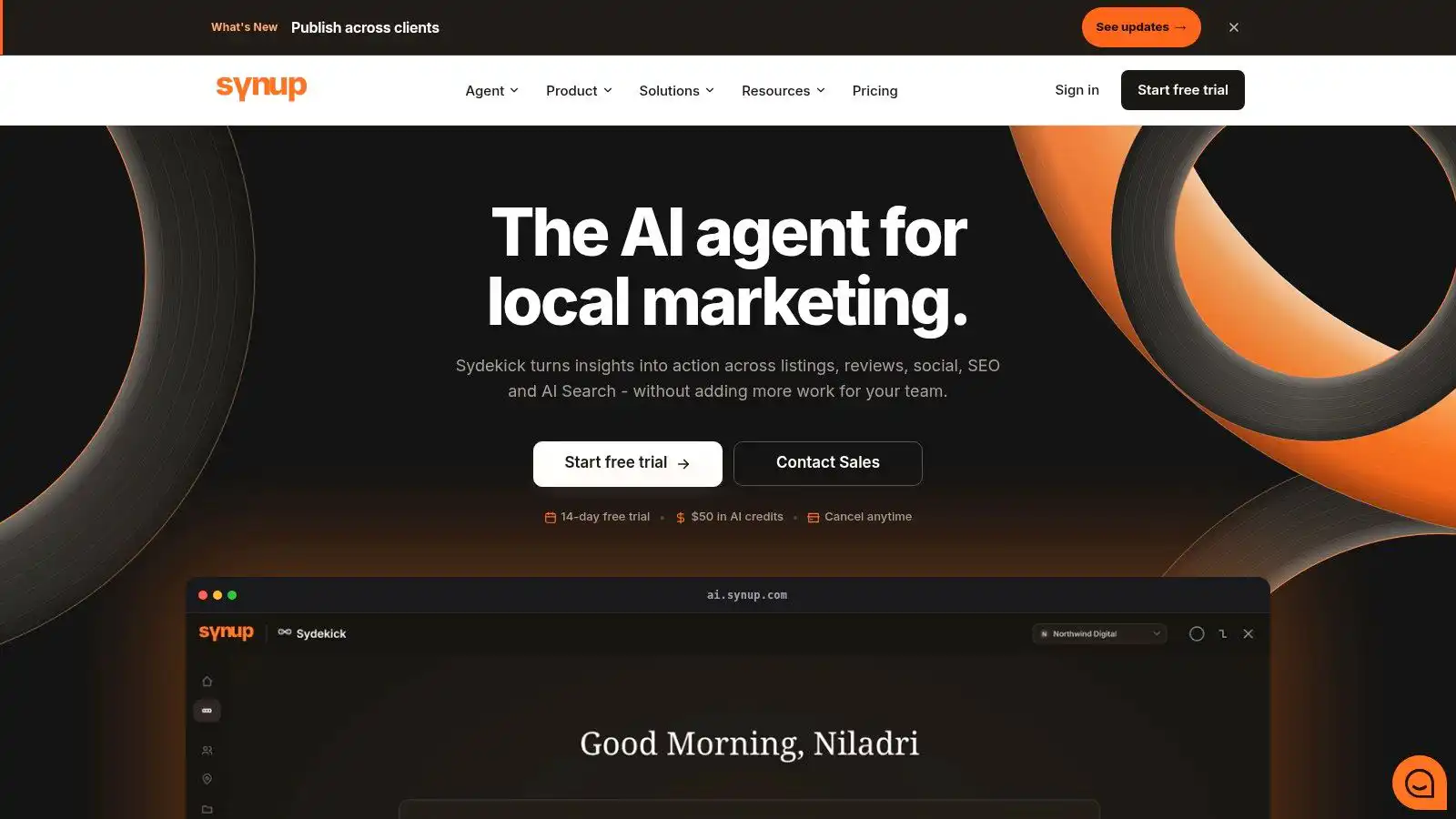
A one-star review complaining about wrong opening hours is really a listings problem wearing a review’s clothes. Synup is built for buyers who want both jobs handled in one place. Synup’s review management software sits alongside listings, local content, rank tracking, and per location pages, so a bad review that traces back to a stale profile gets fixed at the source while you answer it.
Its centerpiece for busy teams is Sydekick, an AI agent with chat, memory, skills, playbooks, and approval workflows. It can monitor reviews from every source, draft a response in the location’s voice, request approval, and publish the reply. Every proposed and completed action lands in a full audit trail, which is the part that matters once more than one person touches the account.
Where Synup Earns Its Place
- Listings accuracy: Profiles sync across Google Business Profile, Apple Business Connect, Bing, Facebook, and other directories, with ongoing audits and autonomous corrections.
- Review generation: Campaigns use short links and message flows to turn recent customers into reviewers without manual chasing.
- Agency controls: A partner suite adds a multi client command center, white labeling with custom domains, branded client portals, and scoped permissions.
- AI visibility: Answer Engine Optimization checks presence in ChatGPT, Gemini, and Perplexity and guides fixes for citation gaps.
That governance layer matters legally. The Federal Trade Commission final rule banning fake reviews and testimonials became effective on October 21, 2024, and prohibits creating, selling, purchasing, or distributing fake reviews. Approval queues and audit logs give you a record of how a request or reply happened, which is the proof a franchisor or a compliance team will ask for.
Choose Synup if you run an agency, franchise, or multi location brand and want reviews, listings, social publishing, and local SEO in one command center. A single location with a handful of reviews a month won’t use the agent depth or the partner portal. Tiers vary by location count and agent throughput, so compare plan details against your actual review volume before signing.
2. Birdeye
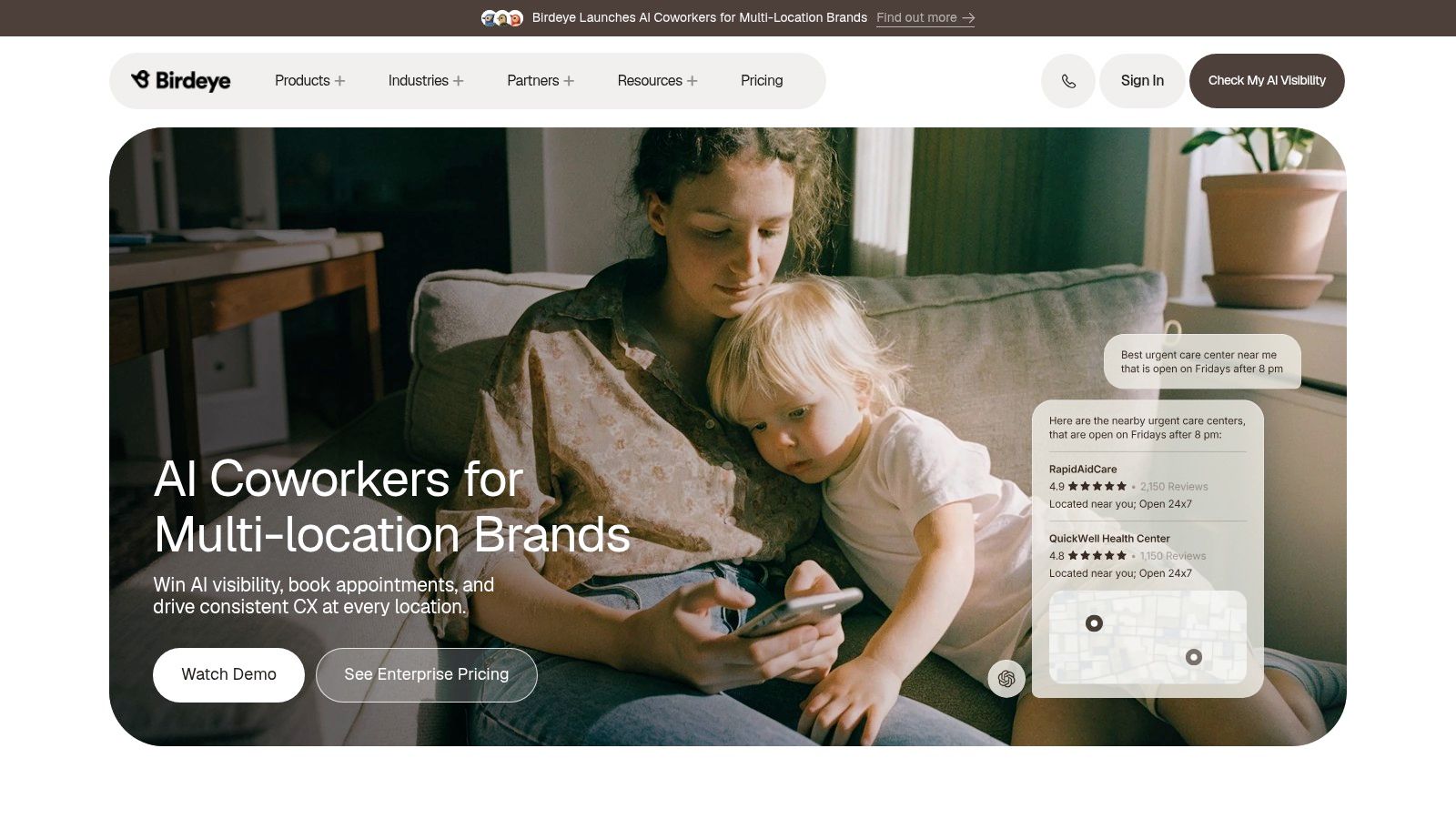
Birdeye’s platform suits franchises and larger multi location businesses that want review collection, responses, listings, customer messaging, and reporting under centralized control. If headquarters sets the policy and local managers execute it, that structure works. If each location runs independently, you’ll pay for oversight nobody uses.
The practical strength is automation at the trigger point. Automated review requests run through integrations, APIs, or data feeds, so a completed job or appointment can start the request without staff remembering to send it. A unified inbox then keeps review activity visible instead of scattered across profile logins.
Trade Offs To Check
- Breadth: Reviews, listings, and customer engagement tools can replace separate reputation products.
- Control: Centralized workflows help you standardize tone and escalation across locations.
- Opacity: Pricing is custom by locations and selected products, so you can’t budget accurately before a sales call.
That last point is the main friction. Ask for an itemized quote that names every module, then compare it against the work described in a practical guide to local reviews and SEO before you assume broader is better. Small businesses often find the platform exceeds their needs. Multi location operators who use messaging and reporting get more value from the bundle.
3. Podium
Say a home services team already confirms jobs, sends arrival windows, and answers questions by text. For that business, Podium makes sense because review management lives inside the same conversations. It combines reviews with text messaging, web chat, and a shared customer inbox, rather than asking staff to open another tool after the job closes.
Automated invitations and follow ups keep requests moving, and AI assisted replies help a dispatcher or office manager respond between calls. The mobile app matters more than vendors admit. A manager in the field who can approve a reply from a phone beats a polished desktop workflow nobody opens until Friday.
Speed still needs guardrails. A RetailWire discussion of a 2025 blind test on AI review responses reported that 58% of participants preferred an AI generated response to a human written one. That supports drafting with AI, not publishing blind. Route safety complaints, discrimination claims, and refund disputes to a person every time.
Let automation handle routine praise and first drafts. Keep a human on anything involving money, safety, privacy, or a customer who is clearly escalating.
The drawback is custom, quote based pricing. You can’t compare Podium cleanly against published price rivals without talking to sales. It’s also a broader communications platform, not a focused review tool. If you only need monitoring and replies, you’ll carry features you don’t need.
4. BrightLocal
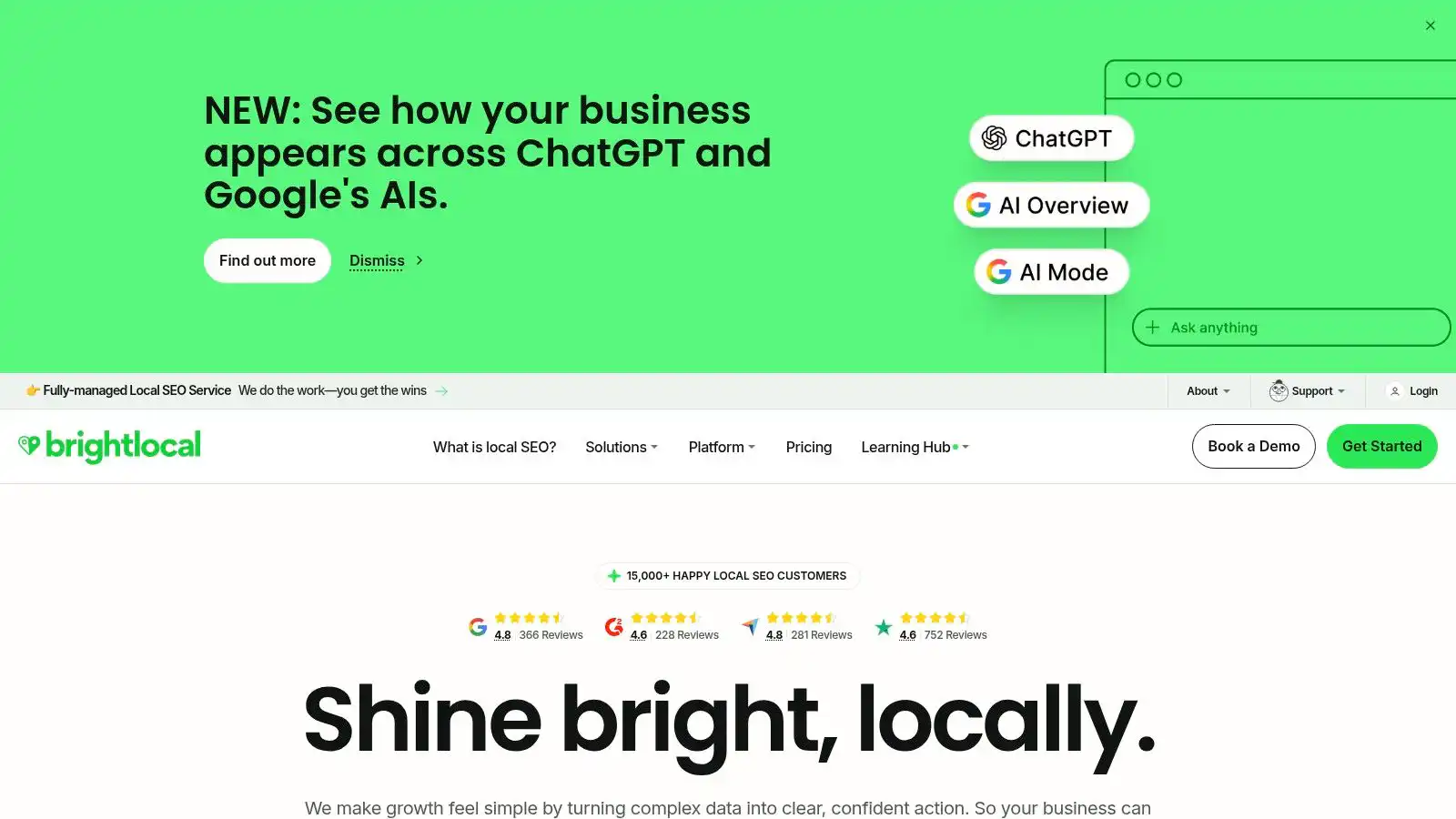
BrightLocal is a local SEO platform first, which is exactly why some buyers should shortlist it. Reviews sit beside local rankings, citations, and Google Business Profile tools, so a team can connect a location’s reputation to the visibility work around it. Agencies get white labeling and reporting options for client delivery.
Review management sits inside a paid plan with published pricing, so you can model cost before a demo. Budget for location scaling: the price rises as you add managed locations. Before signing, confirm how many locations you will manage this year and whether review requests, widgets, and reporting cover the same sites you already track.
What You Get Day To Day
- Monitoring and responses: Track and answer reviews across multiple sites from the platform.
- Requests: Ask by email, SMS, and in store campaigns, matching how the customer transacted.
- Display: Use website widgets to put reviews on location and service pages.
Demand is broad enough to justify that coverage. BrightLocal’s 2025 Local Consumer Review Survey of 1,026 U.S. adults found that 74% of consumers checked at least two review sites before deciding on a local business. A Google-only view misses part of the decision.
The trade-off is bundling. BrightLocal sells review management inside the wider local SEO toolkit, and a business focused only on reviews may pay for rank tracking or citation work it already owns elsewhere. If those pieces are covered, check overlap first; if they are scattered, consolidation is the reason to buy.
5. NiceJob
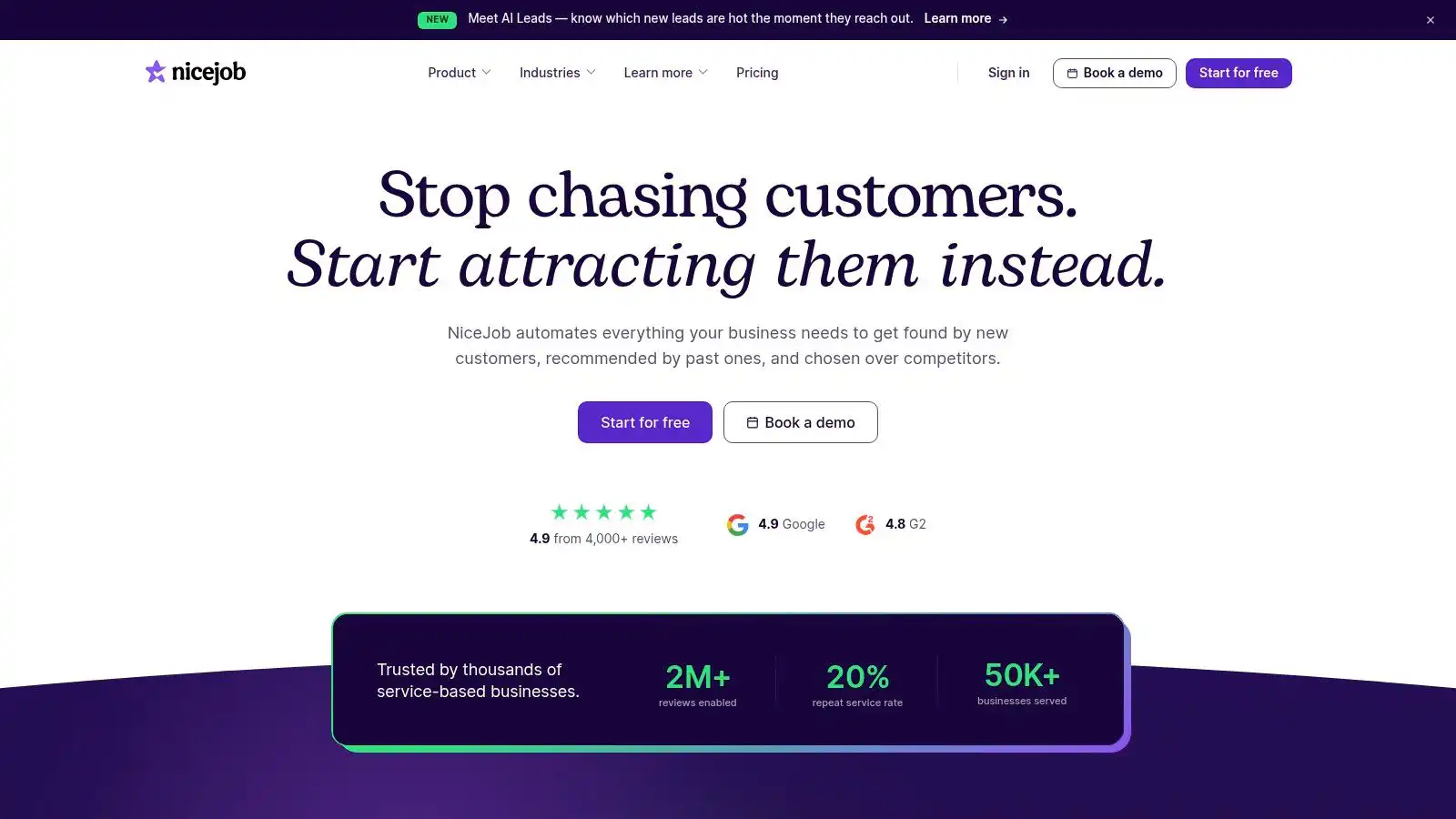
NiceJob is built for small businesses that need more reviews and visible proof rather than enterprise governance. Automated SMS and email requests and follow ups do the repetitive asking, while website widgets, review pages, and social sharing turn the results into marketing assets. For a contractor or clinic with no marketing staff, that loop is the product.
The cost is easy to model before a demo: on NiceJob’s published plans, Starter is $75 per month and Pro is $125 per month, with a 14 day free trial. You can decide quickly whether the request volume justifies the spend, especially alongside a hands on routine like these tactics for getting more Google reviews for a home service firm.
The tier split deserves attention before you buy Starter to save money. Higher tiers add features beyond the basics, so confirm the cheaper plan covers the workflow you are paying for. If it covers collection but not the part of the process slowing you down, the savings buy you a tool that only partly solves the problem. Trial the tier you would really keep.
NiceJob is narrower than all in one communication platforms, and at this size that tradeoff is acceptable. It falls short when you need layered approvals, detailed analytics, or strict controls across many locations. Buy it for collection and social proof. Skip it if what you need is a corporate reputation command center.
6. GatherUp
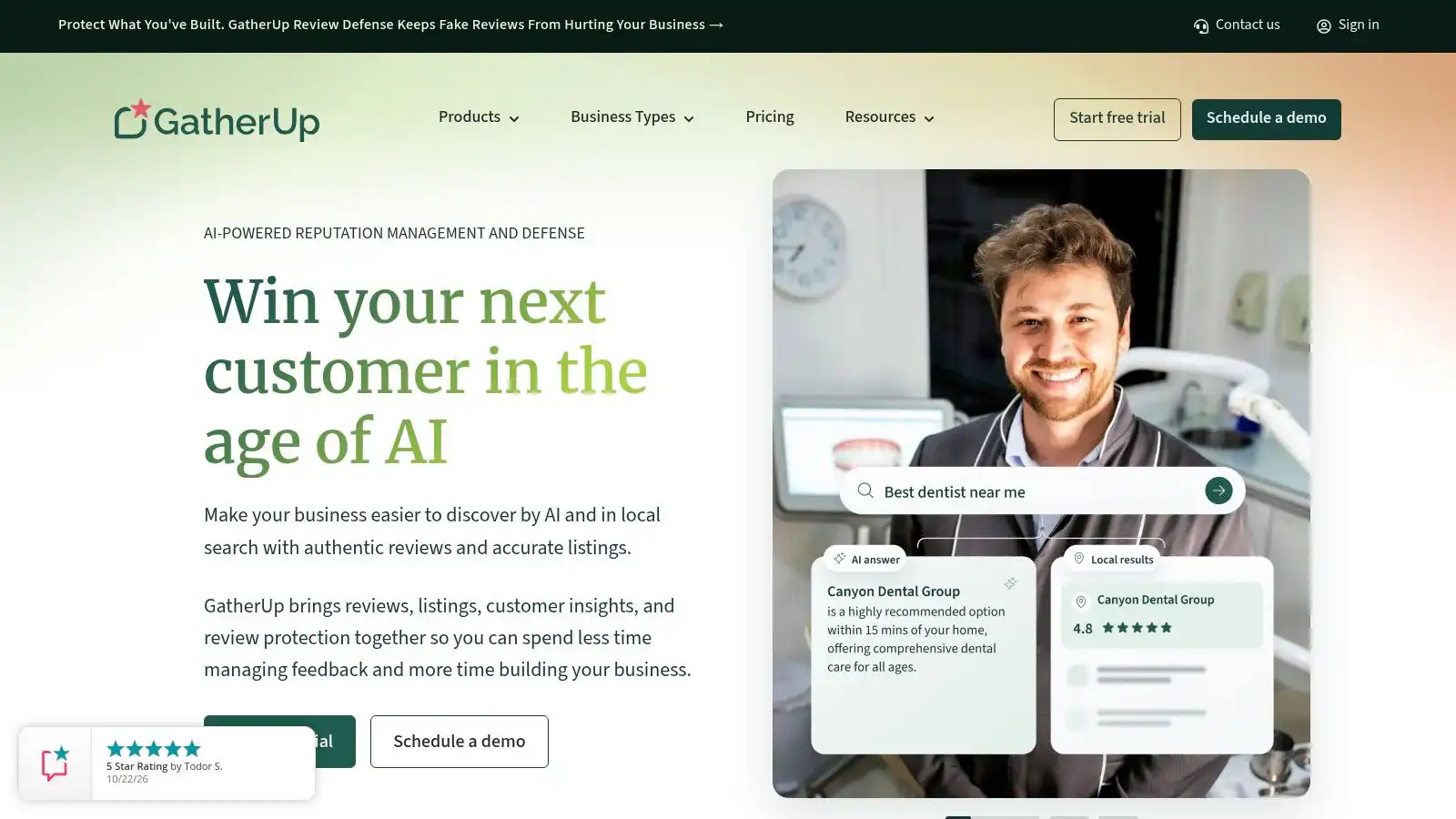
Agencies should look closely at GatherUp. It combines review requests, monitoring, response tools, surveys, and reporting with white label agency plans, so client work can carry your brand instead of the vendor’s. Client access and reporting shape matter here as much as the review request itself.
Coverage is wide. GatherUp monitors more than 100 sites, offers AI crafted replies with in app responding, and adds NPS surveys, AI topic tagging, and reporting. Topic tagging is more useful than another average rating chart. It shows whether complaints cluster around wait times, billing, parking, or a specific technician.
Pricing And The Fine Print
- Local Businesses plan: $99 per month billed annually for one location.
- Multiple Locations: Starts at $60 per month per location billed annually, varying by count and billing period.
- Trial: A 14 day trial is available, and month to month reputation plans exist.
Budget beyond the headline rate. Listings management and Review Defense cost extra, and Review Defense requires an annual commitment. Confirm those add ons before you promise a client a bundled price, and ground the rollout in the mechanics of how Google reviews work for a business. GatherUp’s strength is agency ready structure with published entry pricing, provided you don’t discover the extras after contracts are signed.
7. Reputation

Reputation targets organizations that want public reviews connected to surveys, customer feedback listening, listings, and analytics in one centralized platform. That connection is the differentiator. A dip in public ratings means more when you can compare it with direct feedback from the same location and period.
For a large network, the operational question isn’t whether staff can reply. It’s whether leadership can spot which branches keep generating the same complaint and whether anyone owns the fix. Reputation’s analytics orientation suits that conversation better than a simple request tool. Managed services for review responses and listings work also help teams that have budget but not headcount.
Practical rule: If nobody on your team will act on feedback themes each week, don’t pay enterprise rates for deeper listening. Buy the simpler response workflow instead.
The buying experience is the weak spot. Pricing and plan details come through the vendor and aren’t clearly published on the pricing page. You should confirm included modules, integrations, and services in writing, because managed help and software access are different commitments.
For a small business that only needs review requests and replies, the full platform is excessive. For an operator running many locations and reporting reputation alongside other customer signals, Reputation belongs on the shortlist despite the quote process.
8. ReviewTrackers
Choose ReviewTrackers when the operational gap is interpretation: locations are getting reviews, but nobody can say which themes keep recurring or which sites need attention first. It centers on monitoring, collecting, and analyzing reviews, with alerts and response workflows to keep teams current. Higher level plans add experience analysis and competitor insights, useful for benchmarking themes instead of staring at star averages.
Monitoring covers a broad range of review sites, and review and feedback solicitation is built in, so requests, replies, and tracking sit in one workflow. That matters for multi-location teams where a store manager answers local complaints while marketing watches brand-level patterns. Confirm how seats are counted during the quote if several roles need access.
Two costs need early clarity. Pricing is based on location count and provided by quote, so a regional group should model the exact footprint before comparing it with flat-rate tools. Listings management is available as an add on, not part of the core purchase; if wrong hours or addresses drive complaints, price that add on from the start.
ReviewTrackers will not replace a messaging suite or a full local SEO platform. If your stack already covers those jobs, the narrower review analytics focus is a strength. Buyers expecting one contract for every customer conversation will feel the gap.
9. Trustpilot Business
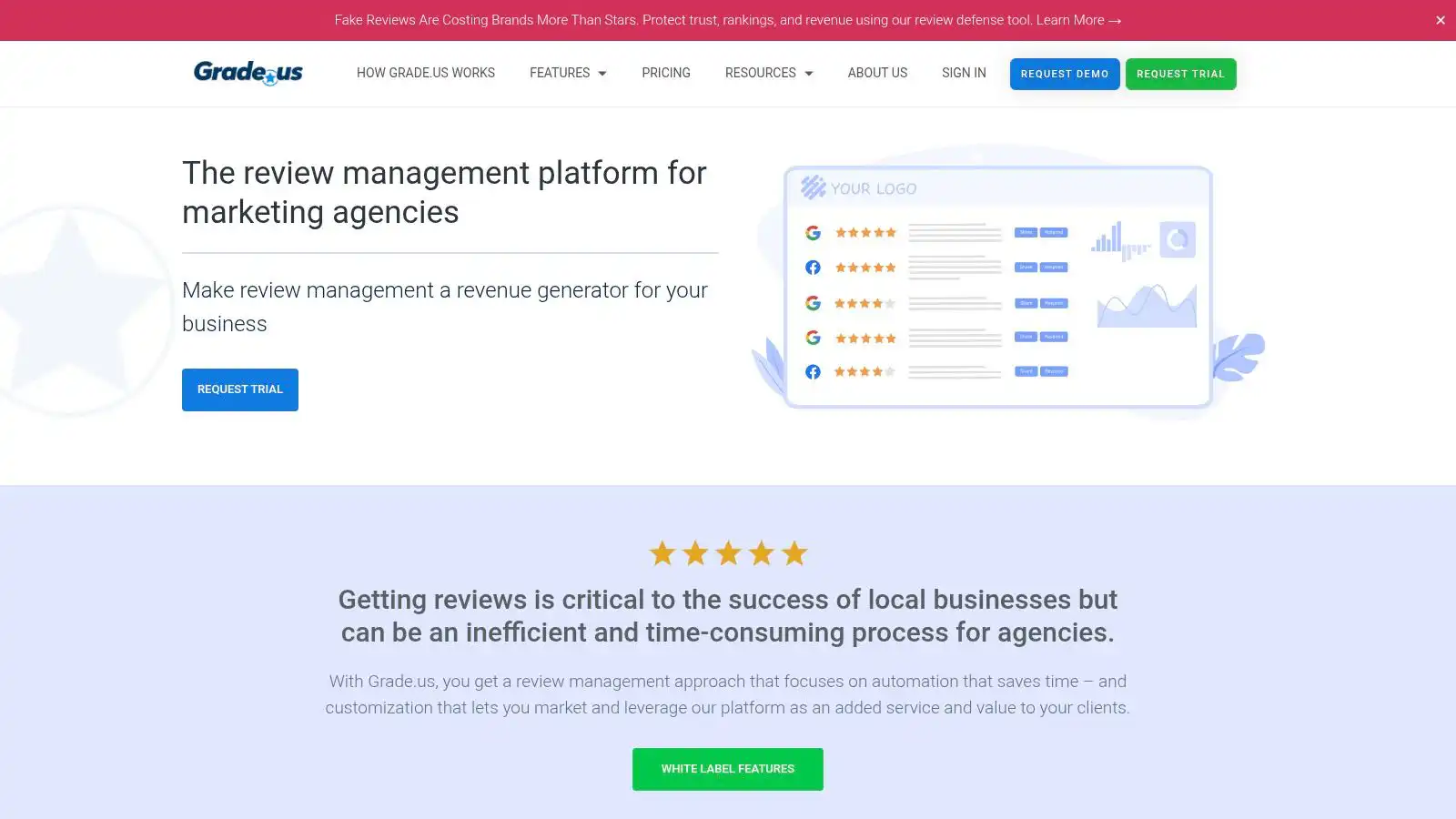
Checkout hesitation is the problem Trustpilot Business is built for. Ecommerce and online service brands use it for a recognizable independent trust signal, with automated invitations, response tools, and widgets that display ratings where buyers pause. The public profile itself carries weight because shoppers already know the name.
There’s a free plan for basic use. Paid plans are priced per domain and typically require an annual commitment, so confirm current pricing with Trustpilot before budgeting and total every domain you plan to run. Higher tiers add invitations, users, integrations, and analytics. Public tiers make early comparison easier than quote only rivals, but the per domain structure changes the math fast. A brand running separate country or product domains should price the full footprint, not just the flagship site.
The review model is open, meaning customers can post without an invitation. That’s what makes the badge credible to a skeptical buyer, and it’s also why negative feedback lands in public. Response speed matters more here than filtering.
Before You Commit
- Commitment: Paid plans generally bill annually, so test invitation flows and widgets thoroughly during evaluation before signing.
- Scope: The open model supports independent proof, but the platform isn’t centered on local listings or map pack workflows.
- Fit: Strong for online checkout and service trust pages, weaker as your only local reputation system.
A dentist, plumber, or restaurant group shouldn’t mistake a strong Trustpilot profile for managed Google visibility. An online retailer worried about checkout confidence gets a tool aimed at exactly that problem. Match the platform to the surface where your buyer decides.
10. Yotpo
Yotpo is purpose built for ecommerce product reviews, including photos and videos that answer fit, quality, and durability questions better than stars alone. Automated post purchase requests and reminders, moderation, customer Q and A, and product page widgets form a tight loop around the catalog. Integrations, including Klaviyo, let review data feed broader marketing workflows.
Visual proof is where Yotpo earns consideration over a generic form plugin. A clothing brand needs customers showing drape and size on real bodies. A home goods seller needs scale in a real room. Yotpo’s display and moderation tools treat those assets as conversion content, not comments to bury at the bottom of a page.
Pricing scales with store order volume, which cuts both ways. Listed examples include Starter at $89 per month and Pro at $169 per month for up to 500 orders per month. Growth raises your bill, so forecast peak season orders, not just a quiet month. Higher tiers add features such as review syndication and deeper analytics, and advanced support may require a higher tier or custom quote.
Don’t force Yotpo into a local services job. It’s less suited to businesses focused on Google Business Profile reviews and map visibility. For a store whose revenue depends on product page proof, its narrow focus is the advantage.
How the ten review management platforms compare on pricing, trials, and best fit
Match the platform to the operational problem first: single-location response speed, multi-location governance, agency white-labeling, ecommerce product reviews, or a public trust profile.
| Item | Published Starting Price | Free Trial or Free Plan | Best For |
|---|---|---|---|
| Synup | Not publicly specified | Not stated | Agencies and multi-location businesses managing local marketing and reputation |
| Birdeye | Custom quote | Not stated | Franchises and larger multi-location businesses |
| Podium | Custom quote | Not stated | Local service businesses managing reviews and customer messaging |
| BrightLocal | $65/month | 14-day free trial | Businesses combining review management with local SEO |
| NiceJob | $75/month | 14-day free trial | Small businesses collecting reviews and showcasing social proof |
| GatherUp | $99/month, billed annually, for one location | 14-day free trial | Agencies and businesses managing reviews across locations |
| Reputation | Not publicly specified | Not stated | Large organizations combining reviews with customer feedback analytics |
| ReviewTrackers | Custom quote | Not stated | Businesses monitoring reviews and analyzing customer feedback |
| Trustpilot Business | Free plan; paid plans from $99/month per domain, billed annually | Free plan available | Ecommerce and online-service brands seeking a public trust profile |
| Yotpo | $89/month (Starter); Pro is $169/month for up to 500 orders per month | Not stated | Ecommerce brands collecting and displaying product reviews |
Rows marked “Custom quote,” “Not publicly specified,” or “Not stated” are terms to pin down before signing, especially annual billing and how usage is measured.
Matching the Platform to Your Location Count and Review Volume
There's no single winner here because the operational problem changes with size. A single location business with low review volume should pick a mid priced tool with a free trial, run it for two weeks, and measure what changed. Track median response time, response coverage, and whether requests go out without staff prompting. If those numbers don't move, extra dashboards won't save the purchase.
Multi location and franchise operators should start elsewhere. Prioritize centralized governance, per location pricing clarity, role based permissions, and integration with your CRM or POS before comparing AI reply features. A request that fires reliably from a completed transaction beats a clever template that depends on a manager remembering to upload a spreadsheet. Ask how locations are counted, what happens when you open or close a site, and which modules sit outside the quoted rate.
Agencies need a different checklist. Confirm the true scope of white labeling, including domains, portals, reports, and email sender identity. Confirm client access rules, too, so a client can approve replies without seeing another client's data. Ecommerce brands should stay focused on product review display, moderation, syndication, and order volume pricing, rather than buying local listings features they won't use.
Questions To Ask Before Signing
- Included features: Does the quote name every module, add on, integration, and support tier you need?
- Request triggers: Does the invitation fire from job completion, appointment follow up, purchase confirmation, or manual upload?
- Ownership: Who drafts, approves, publishes, and escalates a review at each location?
- Compliance records: Can you export review text, rating, author, timestamp, platform, and location identifiers with an activity log?
- Exit terms: What's the commitment length, and what happens to widgets, data, and historical reports if you leave?
Software alone doesn't create visibility. Review volume, recency, responses, and accurate profiles work alongside local search performance, and a location with strong reviews can still lose calls if its pages and profile don't rank. XSquareSEO runs local SEO and Google Business Profile programs for businesses in many markets, connecting review acquisition and response workflows to the map pack results that produce calls and bookings. That connection is where review management stops being reputation housekeeping and starts supporting revenue.
Don't buy another dashboard until you know which workflow is failing. Contact XSquareSEO for a local SEO and Google Business Profile review of your locations, and get a practical plan that ties review requests, responses, and profile accuracy to measurable map pack visibility.