
Google has officially revealed that AI Overviews now has over 2 billion users, and this number keeps growing every day. It’s no doubt a clear indication that searchers’ behavior is continuously changing, but it’s not something to panic about. Instead, it simply requires you to adapt an SEO checklist that helps you optimize your site for higher rankings in both the AI section and traditional SERP results.
That’s exactly what we’re going to provide in this article. This post covers all the essential factors of every key aspect of modern website SEO that deserve your attention. By the end, you’ll be clear on what to focus on to better optimize your site and improve your chances of ranking at the top.
So, let’s get started without any delay.
Table Of Contents
Content Quality Checklist
Here is what you need to focus on for search-optimized writing to rank higher despite AI overview:
Match Search Intent
Google highly values search intent. In fact, it has significantly refined how it determines the intent behind a query since the launch of AI overviews. Now, it cares much more about relevancy than anything else. If you want your pages to continue ranking higher, you must create content that clearly meets what users are looking for.
It requires
- Cutting the fluff
- Answering queries directly
- Adding what matters the most
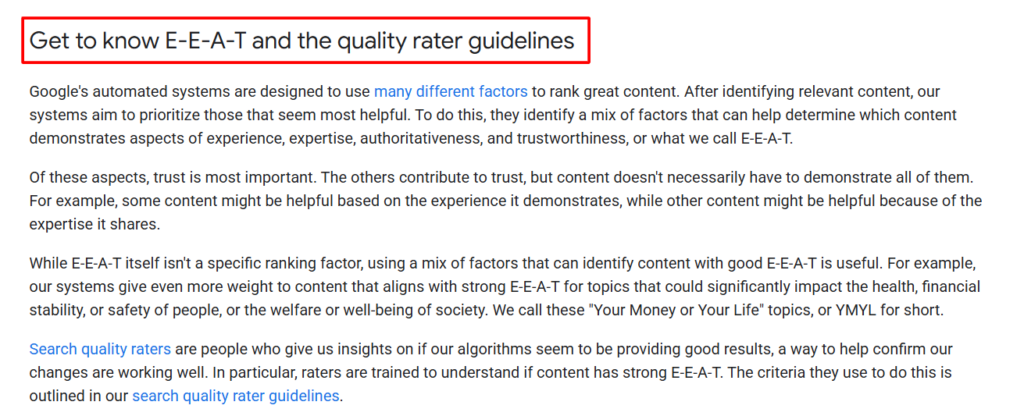
Comply With E-E-A-T
E-E-A-T guidelines still play a pivotal role in how Google evaluates content quality. Even with AI overviews, it prefers information that demonstrates experience, expertise, authoritativeness, and trust. Therefore, make sure that the content has all these quality factors so it naturally earns the attention of search algorithms and gets a gentle push to gain top positions.
Here are some tips to comply with E-E-A-T:
- Add real-life examples
- Share personal experiences
- Add stories and case studies.
- Establish trust through the author’s details.
- Keep content factually accurate.
Retain Readability & Clarity
Content readability and clarity are key factors in how easily readers navigate your information. That means they directly influence user experience, which Backlinko states is still a ranking factor. That’s why you should give as much attention to making your text clear and readable as you do to maintaining other quality factors.
You can follow the tips below in this regard:
- Keep your language plain.
- Use bullets where needed
- Add numbered lists wisely.
- Write short paragraphs
- Bold or highlight phrases
- Proofread text ruthlessly
Ensure Content Originality
Nearly all search engines, especially Google, push unoriginal, copied, or stolen content far down in search results. Their algorithms are pre-trained to prioritize people-first, original information. Even if your pages unintentionally match others, they may experience reduced visibility due to duplication. Make sure you always test content originality with a free plagiarism checker. This final assessment ensures you consistently maintain originality in your web content to improve rankings.
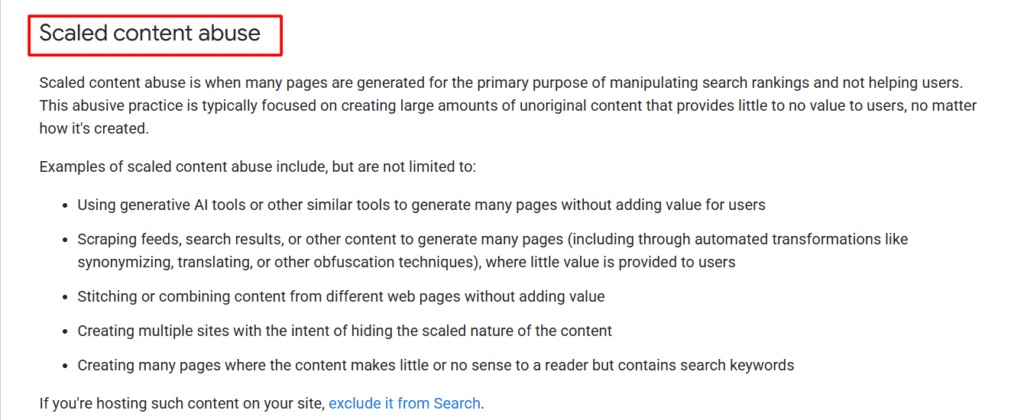
Review Content For AI Traces
Google’s spam policy clearly warns against the abuse of scaled content, including the use of AI-generated content in a manipulative way. Even if your content is genuinely human-written, it can be flagged if it closely matches AI patterns. That’s why it’s essential to check your web material for potential AI traces before publishing. A smart approach is to use an advanced AI detector, which can better identify AI-like parts of your text. If the tool flags any parts, revisit them and make appropriate refinements to add a human touch.
On-Page Checklist
Now that you know what to check in content, let’s move on to the on-page SEO checklist elements.
Optimize Title And Description
Titles and descriptions that appear right below AI overviews can contribute equally to predicting page clickability. If you want searchers to click your content, instead of just relying on auto-generated information, make the titles and descriptions powerful. This can significantly improve how users see your pages in SERP, even if the AI section shows up. For increased clicks,
- Add power words
- Include focus keyword
- Highlight the benefit or value.
- Encourage action yourself
- Keep the title under 60 characters.
- Limit description to 160 characters.
Add Header Tags Chronologically
Header tags such as H1, H2, H3, and H4 make your content easier for search engines to index. With proper tagging, you ensure that web bots understand every part of the text deeply and show it in relevant searches accordingly. This can even enhance the chances of getting featured in the AI section, as it better tells what a heading is about and what query it answers. Use header tags in chronological order, and use H1 only once.
Link Content Internally & Externally
Internal and external linking is something you can’t ignore in an SEO checklist. Why? Because both increase the perceived value or trust of your pages in the eyes of search engines. Besides that, clever internal linking can even strengthen topical clusters, improving your authority over a topic. So, even if it’s an article, guide, case study, or any other write-up, don’t forget to link it internally and externally.
Ensure Natural Keyword Placements
Google highly prohibits keyword stuffing. In fact, it has a separate section in its spam policy that clearly warns those who repeat phrases excessively to manipulate rankings. That’s why you must ensure that you incorporate relevant search terms naturally. Also, instead of focusing on just exact match terms, try to find and add semantically relevant keywords.
Here are some essential places where you should ensure natural placements:
- First 100 words
- Meta title and description
- Main heading (H1)
- Subheadings (H2, H3…H6)
- Body content
- Alt text and URLs
Consider Image Optimization
Image optimization must be an integral part of your on-page SEO checklist. Why? Because it helps your site gain a spot in visual search results. Also, well-optimized photos are more likely to appear in the AI section, as Google doesn’t show just text but also visuals in this part. That means your content can attract more visitors if it has optimized photos.
Guess what? Optimizing pictures is pretty easy, requiring you to just.
- Add descriptive alt-text
- Compress image size
- Name photo files properly
Off-Page Checklist
Traditional off-page SEO continues to support rankings by building trust and authority.
Here is what you should focus on in this regard:
Early Quality Backlinks
The importance of quality backlinks is still intact, even after Google introduced AI Overviews, according to SurferSEO. Whether it’s ranking in the AI section or SERP, the linking domains remain a key factor for this search engine to determine the reliability of a site and its content.
Taking this into account, you must work on building a strong backlink profile. However, make sure that the websites you get links from
However, make sure the websites you earn links from are:
- Relevant to your niche or industry
- Trusted and well-established
- Publishing original, high-quality content
- Free from spam or link farms
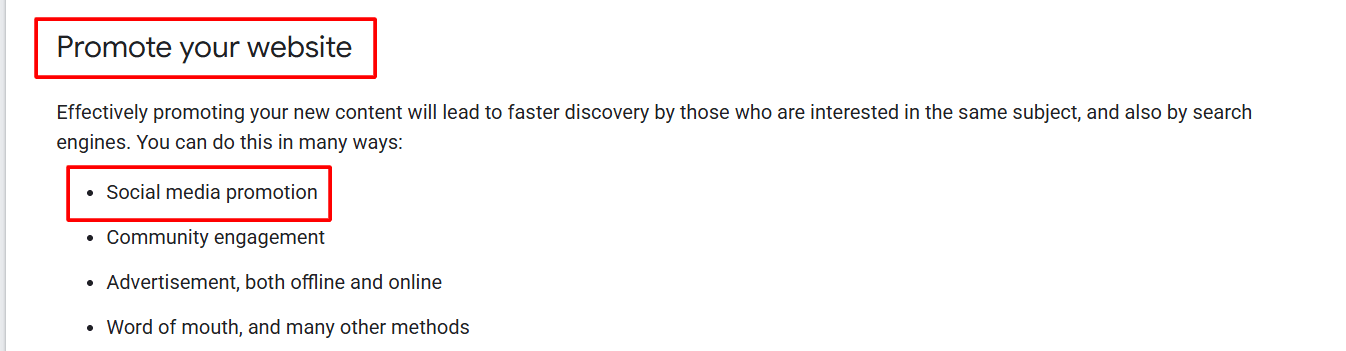
Strengthen Social Signaling
While social signaling isn’t a direct ranking factor, Google does pay attention to how content performs across social platforms. Shares, comments, and engagement can help your content get noticed faster, reach a wider audience, and indirectly improve credibility and traffic. Even Google itself emphasizes promoting your site across social media. So, for higher reliability and chances of appearing in top results,
- Share web material across relevant platforms.
- Encourage comments and discussions.
- Earn natural likes and shares.
Build Authoritative Citations
This is especially a must for local businesses trying to rank their site and blog posts in the SERP and AI section. With more quality listings across the web, you directly signal to Google that people trust your company and its website. This strengthens the search engine’s trust in your business, enhancing the possibility of ranking higher. Therefore,
- List your business in reputable directories.
- Keep NAP (Name, Address, Phone) consistent.
- Include accurate categories and descriptions.
- Avoid spammy directories with low traffic.
Technical Checklist
Remember, all your SEO efforts can fail if you ignore the technical side. Whether it’s fetching answers from sites for AI overviews or ranking pages in traditional search results, Google prefers websites that are technically optimized. That means taking care of all the necessary technicalities of your site isn’t just a choice but a must for appearing at the top against relevant queries. That’s why you must review the essential technical aspects mentioned below. To master these skills practically, Skillfloor’s Digital Marketing Course in Bangalore offers hands-on training in technical SEO, tools, and real-world projects.
- Optimize Page Speed: Make every page load faster by minifying code, using cache, lowering HTTP requests, and optimizing the size of pictures.
- Ensure Responsiveness: Make sure your website works equally well on all devices, including mobile, desktop, and tablet. You can run a regular responsiveness test for this purpose.
- Fix Indexing Issues: Google features content that is crawlable and indexable. So, make sure web crawlers don’t face any restrictions in visiting, reading, and indexing your pages.
- Refine Site Architecture: A good site structure streamlines navigation for both search engines and users. Therefore, keep it organized with clear categories, subcategories, internal linking, URL structuring, and fixing broken links.
- Create & Submit Sitemap: Submitting a sitemap directly adds to the discoverability of your pages. That’s why it’s necessary that you build and submit an XML sitemap to Google Search Console.
- Avoid Duplication Issues: Duplication may limit the rankings of similar pages in both SERP and AI overviews. You need to avoid it by properly using canonical tags, no-index tags, redirects, and careful content syndication.
- Implement Schema Markup: As per the study of Surfer SEO, implementing structured data helps both traditional ranking and AI sections. So, you should consider applying relevant schema markups to the suitable pages.
Over To You
After going through this guide, we hope that you have learned how to optimize your site from every aspect for higher rankings. From content and on-page elements to off-page strategies and technical aspects, we have covered all the necessary things comprehensively. Now, it’s your turn to apply this checklist, review your website carefully, and make the suitable updates. If you do everything correctly and consistently, we believe that you’ll certainly see a big difference in rankings.
About the Author
Jay Patel is the Founder of XSquareSEO, a full-service SEO agency with experience in on-page SEO, eCommerce SEO, link building, technical SEO, SaaS SEO, and local SEO. For more information, feel free to contact us.
Explore More Guides
Managed WordPress Hosting Guide
Australian Business Digital Shift
5 Best Sentence Expanders
Marketing Data Integration Tools
SEO Tips for Tech Startups
AI SEO Strategy Guide
SaaS Signup Search Strategy
Get Mentioned in ChatGPT
Top SEO Lead Gen Email Agencies