
“If no one finds your content, it’s like it doesn’t exist.”
This is a common reality for many website owners. They are writing blogs regularly, publishing pages, and still wondering why traffic is not coming. In most cases, the problem is not a lack of effort. The issue is content writing mistakes that quietly hurt SEO.
The painful part is that these mistakes often go unnoticed. You keep publishing, but rankings don’t improve. Traffic stays low, and this leads to frustration and wasted time.
In this blog, I’ll break down 7 common content writing mistakes that hurt SEO and explain how to fix them in a practical way. I will show clear issues and simple fixes that actually help your content perform better in search engine results pages.
Table Of Contents
What is SEO?
SEO (Search Engine Optimization) involves optimizing a website to enhance its visibility and attract more organic traffic from search engines like Google. This procedure optimizes a website for search engine algorithms by utilizing relevant keywords, high-quality content, and a positive user experience. It also establishes authority to achieve a higher page rank in search results.
SEO involves several stages. These include understanding user intent, ranking pages based on relevance, content quality, and keywords, and crawling and indexing by search engines.
Using SEO helps a website go from unnoticed to visible. It connects businesses with their target audience at the right time.
Common Content Writing Mistakes And How To Fix Them
Here are the seven most common content writing mistakes that hurt your site’s SEO and easy ways to fix them.
1) Writing Without Search Intent In Mind
One of the big mistakes I see a lot is writing content without thinking about what people are actually searching for. You might have a great topic in mind, but if it doesn’t match the user’s search intent, your content won’t perform in Google.
People usually search for specific answers. But many writers focus on what they want to say instead. This makes the content less relevant and less helpful for the user.
How to Fix It:
Content relevance is key. Your writing should answer questions clearly and provide real value. Understand the user intent first, like what people are actually searching for about something. Type your main keyword in the Google search. It will show a number of user queries that people are already searching for. Here is an example:
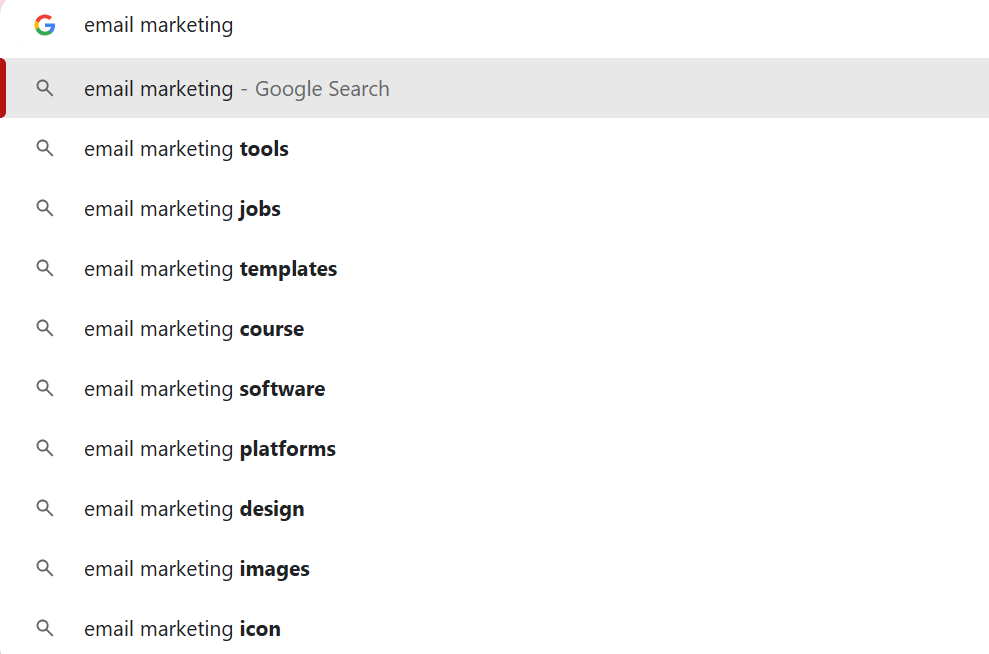
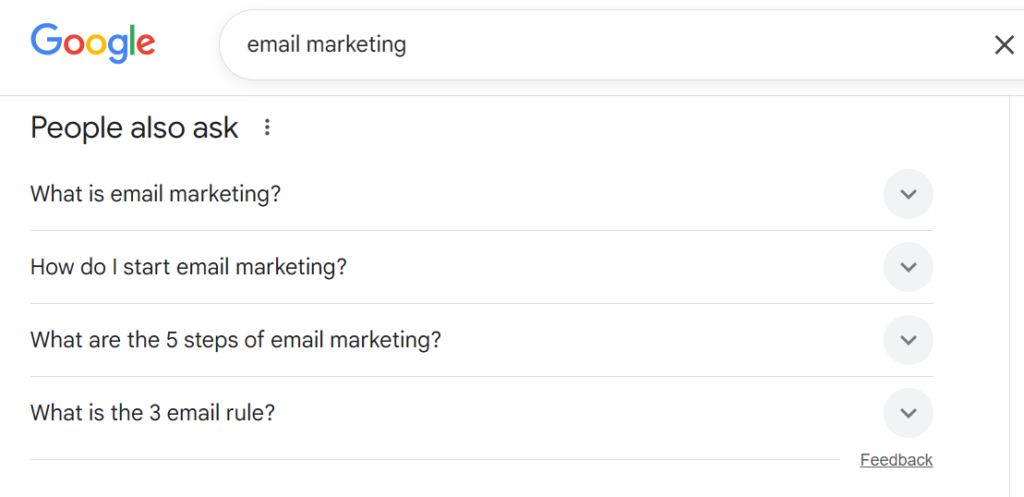
Check the top-ranking pages for your keyword and see what kind of content they provide. Also, you can look for the “People also ask” section. These show real questions users have.
Google now also shows products and services related searches by the users. Here is an example:

Another method is using a free keyword research tool like Semrush to find relevant keywords. Collect the search terms from here also and write your content to answer those questions clearly.
2) Creating Thin or Shallow Content
Another major issue is publishing shallow and thin content. Some blogs create short and incomplete content pages. They do not provide enough information about a specific topic. Also, many writers publish content just to cover a keyword. They do not think about content depth or real value.
Thin content does not help users. It gives basic information but leaves questions unanswered. Because of this, content quality suffers. Google can easily detect when a page lacks depth. Such pages fail to build topical authority and often struggle to rank, even if the keyword is correct.
How to Fix It:
The simple fix to this is to first make an outline around your main topic. If you start writing directly, you may miss important details. But when you have a detailed outline, it will guide you later while writing. This way, you can cover all the important points.
Secondly, avoid covering multiple topics in a single blog. Choose one topic and explain the subject in detail, and answer related questions. Also, look at top-ranking pages and note how much information they provide.
3) Using Keywords the Wrong Way
Many writers either add too many keywords intentionally or force them into the content where they don’t fit organically. This practice is known as keyword stuffing.
Keyword stuffing is an outdated technique once used for ranking content pages in the search engines. Now, this hurts SEO a lot instead of supporting it. It makes the content hard to read and unnatural for users. Also, the search engines can read the content now and flag it as inappropriate with the help of contextual understanding.
How to Fix It:
Use the primary keyword very carefully. According to HubSpot, a good keyword density is about 1-2%. It means a keyword should show up 1 to 2 times in every 100 words.
The secondary keywords should be used sparingly and organically where possible. They should support the main topic, not confuse the reader.
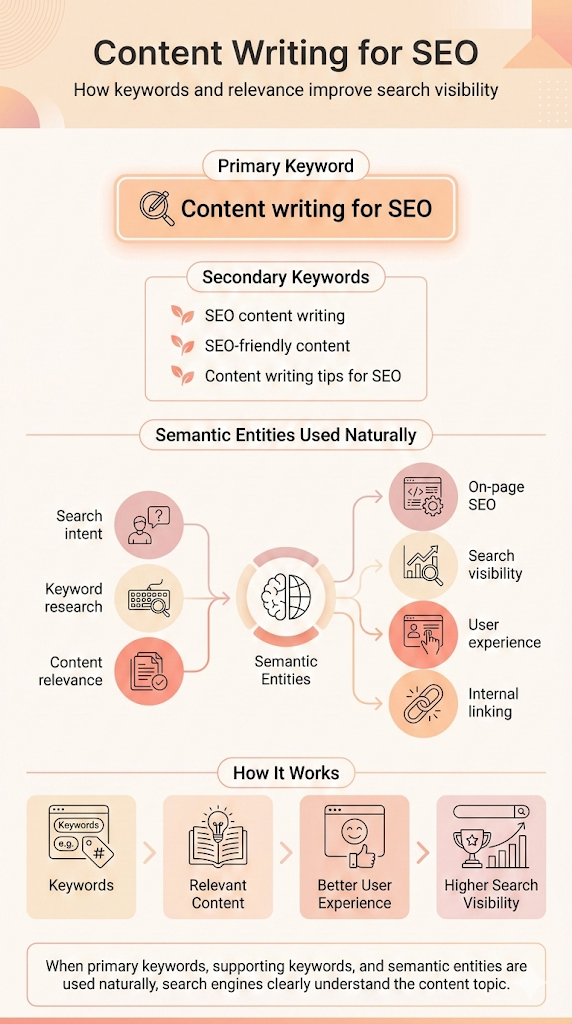
And the most important thing: use semantic entities throughout the content very wisely. These are the words that help the search engines understand what you are actually talking about. Here is an example of entities related to a primary keyword:
4) Publishing AI-Generated Content
Well, another big mistake is when people get help from AI and publish the same content without editing it. AI tools can write quickly. However, most of the time, the content generated is stiff, robotic, and generic.
It often misses both context and emotions. Hence, it fails to build connection with the reader. This results in low engagement and increased bounce rate.
AI-generated text also lacks strong EEAT signals like real experiences and useful insights. Search engines are getting better at detecting low-quality content. When the content is generic and robotic, it fails to build topical authority and relevancy in search results.
Does AI Write Seo-Optimized Content 3x Faster Than Human Writers
How to Fix It:
Never publish AIGC without adding value and human touch. Read the content carefully and humanize AI text to remove complex phrasing and robotic tone from your content.
A plus point will be if you also add personal experience, and insights. Verify all facts added by the AI tool and add links to sources for credibility.
5) Under-Optimized Meta Tags
Ignoring meta tags or not optimizing them properly is the most common mistake, especially for new content writers who do not understand on-page SEO well.
Meta tags help search engines and the readers understand what a page is about. When these tags are missing or poorly written, it becomes a missed opportunity.
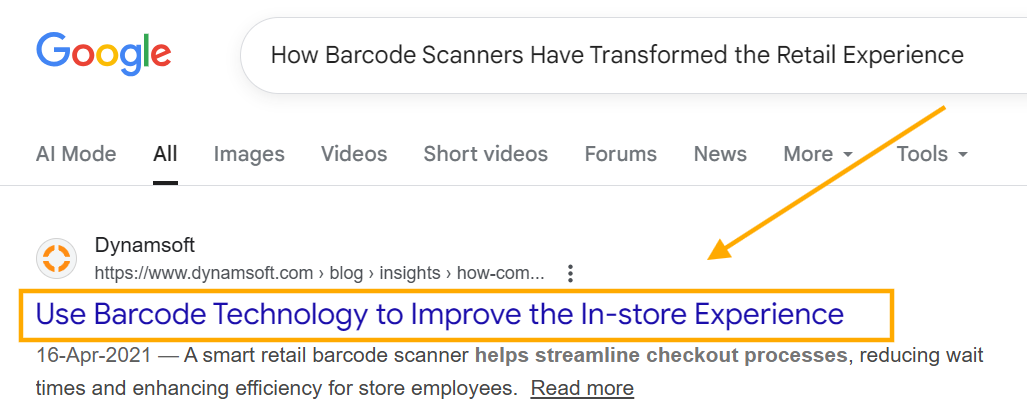
The most common meta tags are the title tag and the meta description. Title tag appears in Google search results when someone searches for a topic or keywords relevant to your blog. Here is an example:
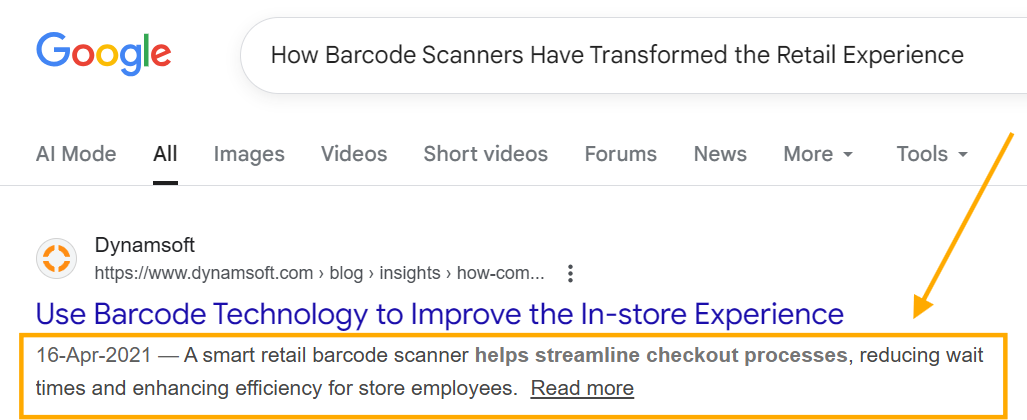
The meta description is the short text shown below the title. Here is an example:
How to Fix It:
Always write a unique title and meta description for each page. Use your target keyword naturally in both. Keep them clear and relevant to what the page offers. Also, make sure your main heading and image alt text support the topic. This helps search engines connect your page with the right search query and improves visibility.
6) Ignoring Proper Headings and Structure
Many sites don’t use headings correctly. No clear order. The whole content page looks like a single, unstructured piece of text. Sometimes, the writer discusses two to three different things in a single paragraph.
People now do not read word by word like a book. They first scan the whole post to see if the required information is present there. If the content is unstructured, the readers will leave instantly.
Formatting is often ignored, too. Big chunks of text, no bullet points, no space. It makes users scroll randomly to search for related information.
How to Fix It:
Use proper headers and build a hierarchy in structure. Assign H1 to the title. Then use H2 and H3 for the subheadings. Break the content up into small sections and write headings that clearly give an idea about the description. Use short paragraphs, bullet points, and proper spacing. It helps improve the readability and gives the page structure.
7) Poor Internal Linking and Anchor Text
Another common issue is poor internal linking. Many websites publish multiple pages, but they do not connect them properly. Some pages have no internal links at all. Others are linked randomly without any planning. Because of this, users find it hard to move between pages. Search engines also struggle to understand the site structure.
Anchor text is another problem. A lot of writers use unclear words like “click here” or write “read more.” There is no explanation about what is on the linked page for the reader.
Hence, search engines cannot understand the relationship between pages. This affects topic clusters and overall URL structure.
How to Fix It:
Link related pages with each other. When you write about a topic, add internal links to other pages covering the same subject. Use clear anchor text that explains what the linked page contains.
Also, try to organize content into topic clusters. This helps users navigate the site and helps search engines understand content relevance.
Must Read: What is Internal Linking in SEO? Anchor Text & Strategy Guide
Final Words
Most websites don’t struggle because of competition. They struggle because their content lacks basic SEO. As I have discussed seven of the most common content writing mistakes, committing any of them can lead to losing your rankings in search engines.
If a visitor cannot quickly understand what a page is about, they leave. When people leave early, rankings drop. This is where SEO really fails. Not in tools or algorithms, but in weak content decisions.
So, analyze your existing content for any of the above-mentioned mistakes. If you find any of them, make sure to correct them. And if you are a beginner, avoid these mistakes to get your content ranked in search engines.