
I have watched SaaS teams pour resources into content that ranks nicely but barely moves the signup needle. Traffic looks great in dashboards, yet trial numbers stay flat. You need an approach that ties every piece of organic content directly to new accounts.
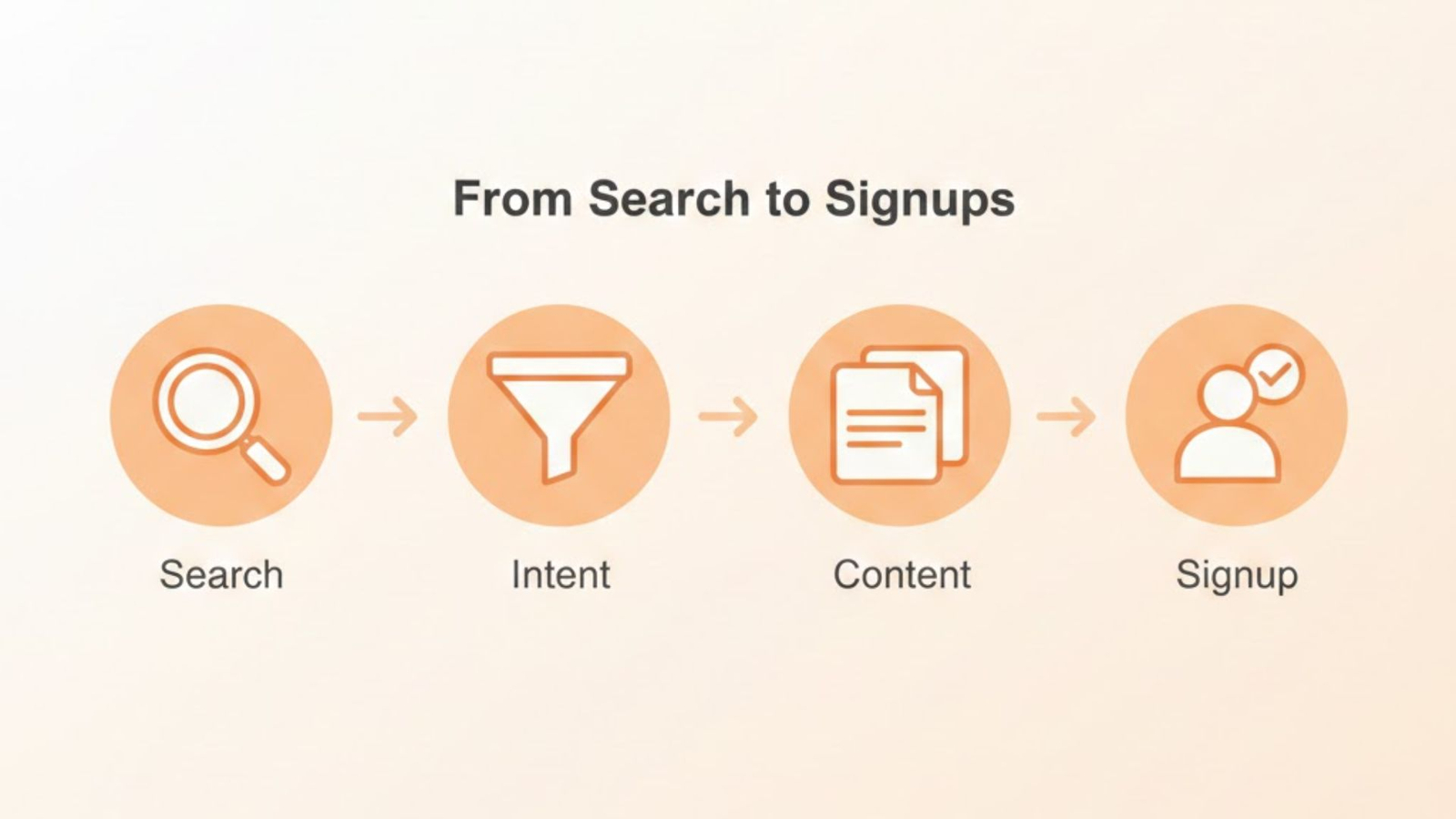
This playbook works for both product-led growth (PLG) and sales-led growth (SLG) teams. If you run PLG, you can ship integration and template pages that push visitors into their first value moment. If you run SLG, you can build comparison and industry pages that qualify buyers and route them to demos.
Table Of Contents
Define Success So Every Page Has One Clear Conversion Goal
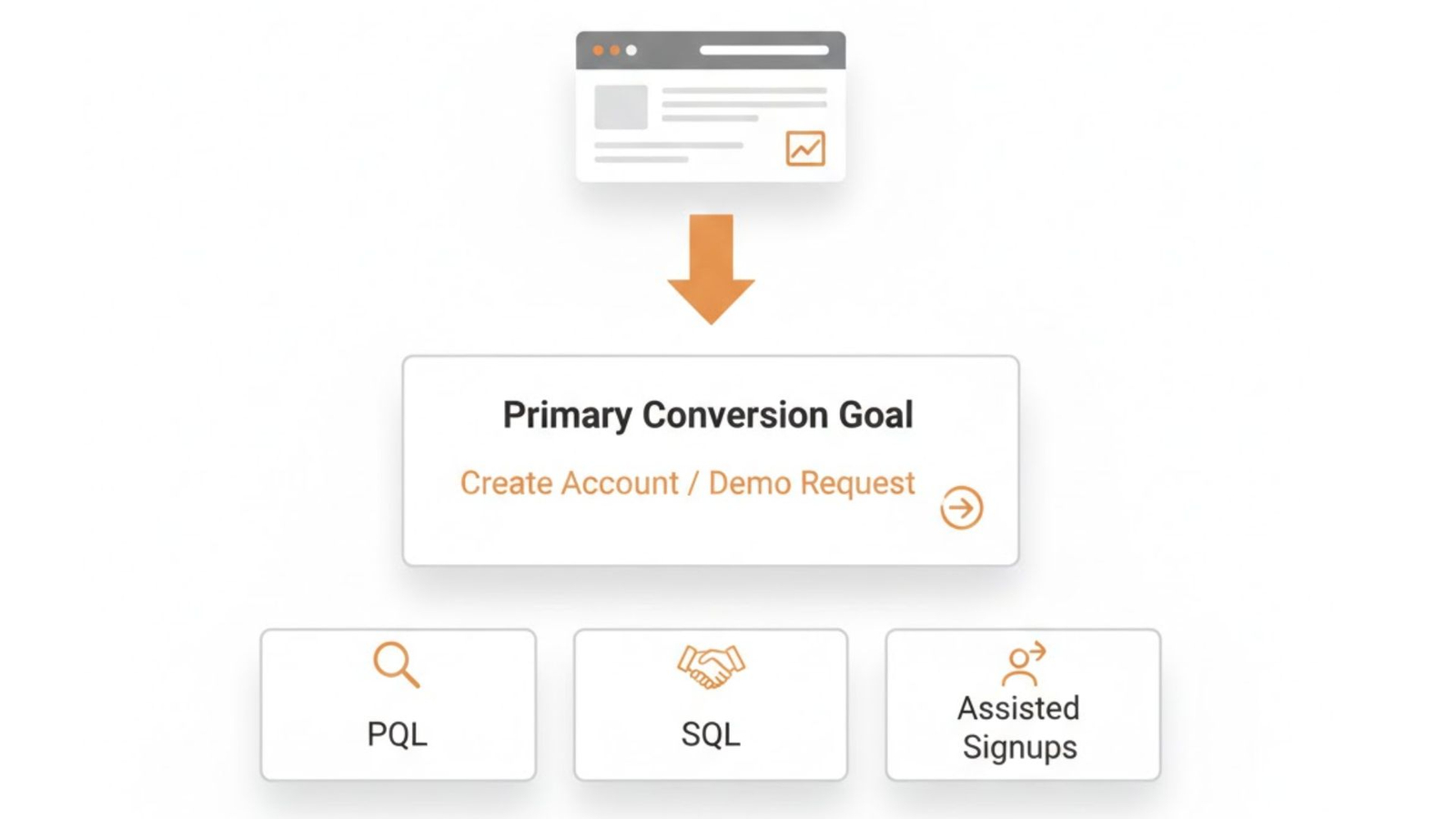
Clarity on what counts as a win prevents wasted effort. Pick one primary conversion event for each motion. For free trials and sales-led motions, that is usually a create_account or demo_request event.
Build Your Conversion Taxonomy
Your team needs shared definitions for product qualified lead (PQL), sales qualified lead (SQL), and activated user. Without this clarity, marketing celebrates traffic while sales question lead quality. Secondary metrics like qualified sessions and assisted signups show which pages influence conversions, even if they do not close deals.
Set Targets With Leading Indicators
Monthly signup goals give you a destination, and leading indicators show whether you are on track. Track share of voice in the top three positions, search impressions, click-through rate, and Core Web Vitals pass rate. Check these weekly and run monthly retros to tie movement back to specific actions.
Run A Short Audit To Learn What Already Works
You cannot improve what you have not measured. Pull twelve months of data from Google Search Console, Google Analytics 4 (GA4), and your CRM. Map which landing pages already drive signups and which ones leak visitors.
Where To Look First
Export Google Search Console queries and group them by intent. Overlay GA4 conversion data to find pages that already convert. Trace assisted signups through your CRM to confirm which pages influence late-stage opportunities.
Quick Wins For Week One
Fix Core Web Vitals on pages that already convert, because speed directly affects conversion rates. Consolidate duplicate pages that cannibalize each other. Add or refine above the fold calls to action (CTAs) and proof blocks on your best performers before you create anything new.
Map Real Customer Questions To Search Intent Before You Chase Keywords
Strong keywords come from understanding what your buyers actually search for when they have a problem your product solves. Start by interviewing Sales and Success teams to pull out concrete scenarios and decision triggers.
Research Inputs That Work
Transcribe sales calls to capture the exact phrases buyers use. Review G2 and Trustpilot feedback to find pain-driven terms. Study competitor comparison pages to spot gaps you can fill with product proof.
Create An Intent Taxonomy
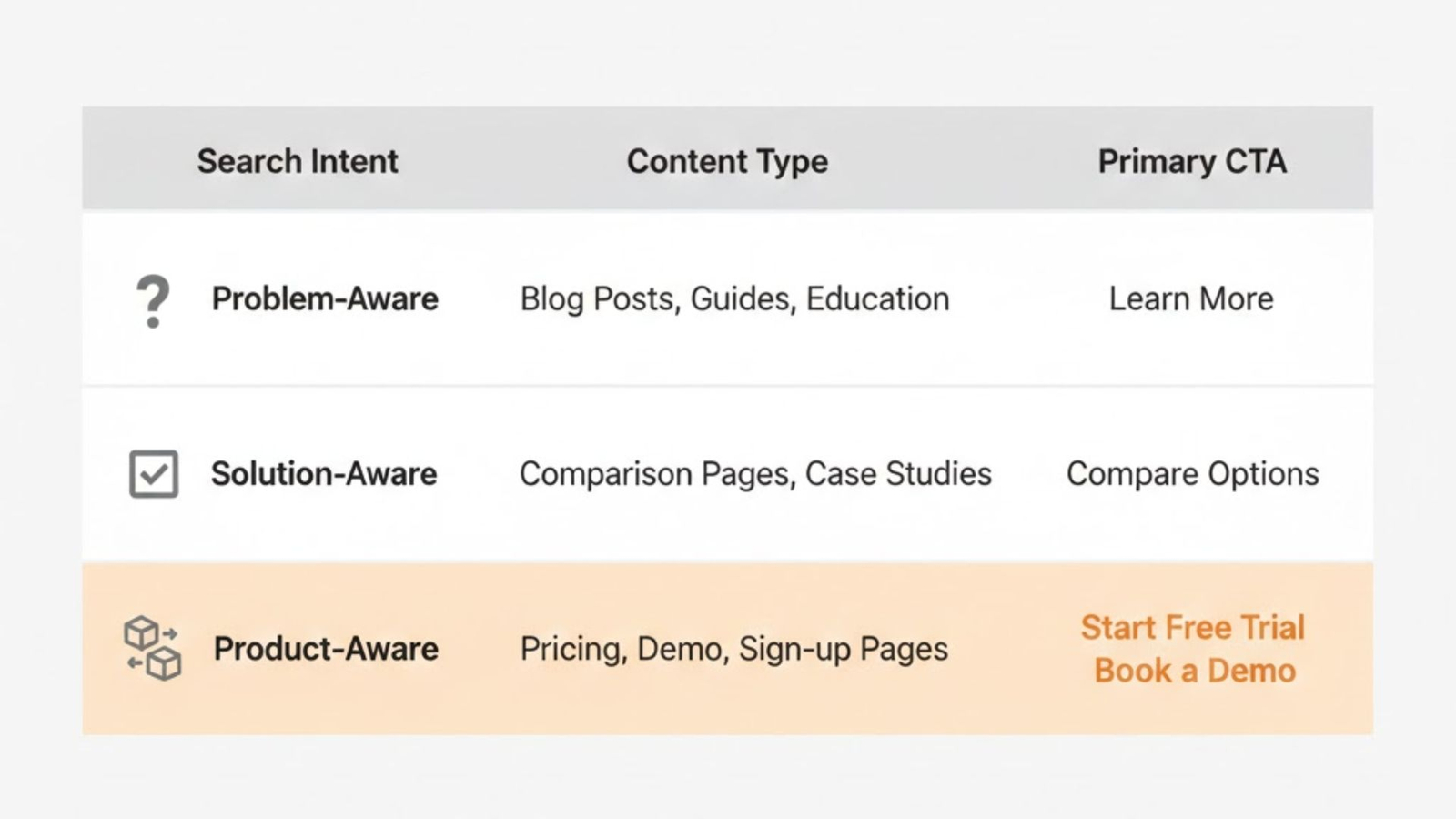
Bucket queries into problem-aware, solution-aware, and product-aware categories. Problem-aware searchers need how-to guides with your product embedded. Solution and product aware searchers want use case, industry, and comparison pages with direct CTAs.
Choose Keywords You Can Realistically Rank For And Profit From
Scoring keywords properly keeps you from chasing terms where you have almost no chance. Use four fields: intent score, business value score, difficulty, and time to value.
The top search result averages about a 27 percent click-through rate, and the top three positions capture roughly half of all clicks. Features in the search results change that pattern, especially on mobile. Go after terms where moving from position six to three meaningfully changes your clicks.
More Insights on This Topic
Understanding Different Types of Keywords: A Complete Keywords Guide
Why Are Keywords Important in Research for SEO and Content Growth
How to Research Keywords for a Niche Market to Target the Right Audience
Match Content To What Already Wins In Search Results
What already ranks tells you what Google believes searchers want. Match that format, then stand out with product proof and clear actions.
Comparison Pages That Convert
Use factual side-by-side tables sourced from public docs. Address persona-specific pros and cons honestly. Include migration steps and import paths to reduce perceived switching cost.
How To Guides That Drive Usage
Lead with workflow steps, then show how your product handles each one. Offer templates and sample data so readers can try within minutes. Keep intros short and promise a specific outcome.
Structure Your Site Around How People Buy And Use Your Product
Your information architecture should mirror how people evaluate and use your product.
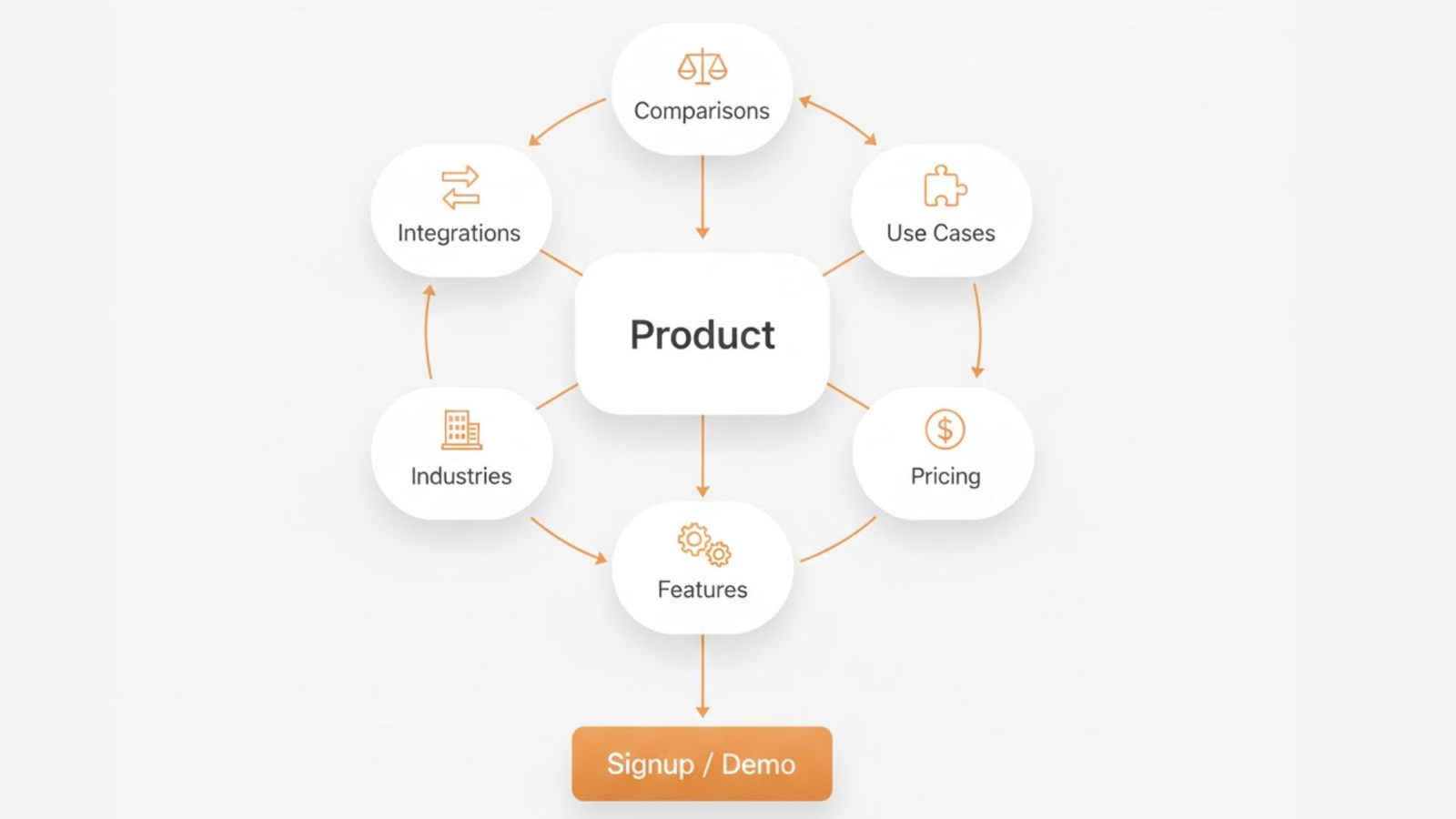
Build hubs for Use Cases, Industries, Integrations, Comparisons, Features, and Pricing, and connect them with internal links and contextual CTAs that point to clear next steps.
Focus On Bottom Funnel Pages That Turn Visitors Into Signups
Integration pages capture product-aware traffic and can deliver immediate signups. Comparison pages accelerate evaluation by giving buyers honest tradeoffs, and industry pages connect pain to outcomes with relevant templates.
Fix Technical Basics So Visitors Experience Fast, Stable Pages
Speed and crawlability are invisible taxes on signups. Aim for Interaction to Next Paint (INP) under 200 milliseconds, Largest Contentful Paint (LCP) under 2.5 seconds, and Cumulative Layout Shift (CLS) under 0.1. Focus on long tasks and event handlers that delay responsiveness.
Decide Between In House And Agency Support Based On Skills And Speed
Build internally if you have a small cross functional team that can ship every week, and bring in an agency when you need more speed or senior guidance. When you compare firms, look at detailed case studies, evaluate their process, pricing, reporting, and track record, and use independent roundups like best SaaS SEO agencies and ask for proof that content produced measurable trials or demos within a few quarters. MADX Digital, for instance, is known for its transparent reporting and proven ability to drive measurable results for SaaS companies. Always ask for proof that the content produced measurable trials or demos within a few quarters before making your final decision.
Work In Ninety Day Cycles So You Can Ship, Learn, And Adjust
Month one sets up tracking, ships quick technical wins, and publishes six to eight bottom funnel pages. Month two adds mid-funnel content, partner outreach, and Core Web Vitals fixes. Month three scales integrations, refreshes underperformers, and reviews signup lift.
Keep Your Focus On Signups And Simple, Honest Reporting
Treat signups as your north star and prioritize content that drives trials within the quarter. Run a ninety day cadence that ships useful pages, fixes speed issues, and adjusts targeting based on real data. Keep reporting simple and tied to business outcomes.
FAQ
How Long Until I See Results?
Expect initial uplift within one to two quarters if you publish bottom and mid funnel pages while fixing technical issues. Returns compound over multiple quarters, with results generally starting after four to six months.
How Do I Pick My First Topics?
Start with integration, comparison, and industry pages tied to your highest value segments. Limit the first list to 50 to 100 terms so velocity stays high.
How Do I Measure Assisted Impact?
Tag content touches in your CRM and analytics so pages receive assisted credit when they appear in converting journeys. Report assisted signups alongside last touch so you capture the real effect.
When Should I Scale Programmatic Pages?
Prove that a hand crafted template converts for a small set of integrations before scaling. Set quality thresholds like screenshots and a minimum amount of unique copy before you publish at volume.